The Modern Demand on Vintage Electrics
If you live in a charming Victorian terrace in Greenwich or a 1970s semi-detached in Bromley, your electrical system was likely designed for a simpler time, one of incandescent bulbs and record players, not high speed Electric Vehicle (EV) charging.
As more homeowners make the switch to electric, the question isn’t just “which car should I buy?” but “can my house actually handle it?”
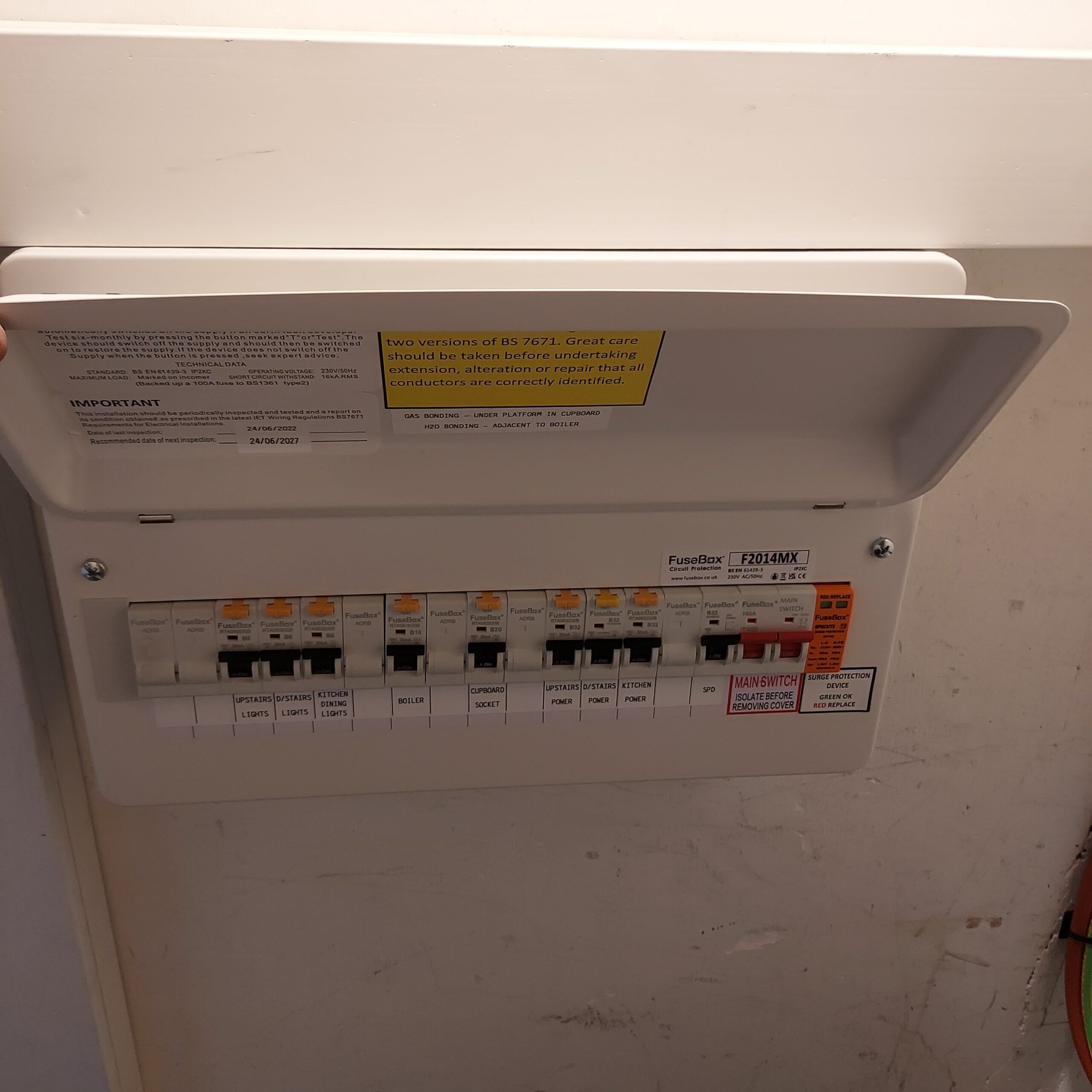
At Selkent Electrical, the fuseboard (or consumer unit) is the first thing we inspect during a site survey.
Here is why it matters.
Why EV Chargers are “Heavy Hitters”
A standard home EV charger (like a Zappi or Hypervolt) typically draws around 7kW of power. To put that in perspective, that is roughly the same as running seven large microwave ovens at the exact same time for several hours.
Most older fuseboards weren’t built for this “sustained high load.”
3 Signs Your Fuseboard Needs an Upgrade Before Your EV Arrives
If your board has any of the following features, it’s likely time for a modern consumer unit:
- Wooden Backing or Plastic Casing: Old-style boards with wooden backs are a significant fire risk. Modern regulations now require non-combustible metal consumer units.
- Rewireable Fuses: If you still have to manually wrap a piece of fuse wire around a carrier when a fuse blows, your system lacks the modern safety “trips” (RCBOs) required for an EV circuit.
- No RCD Protection: A Residual Current Device (RCD) is a life-saving switch that trips the power in milliseconds if it detects a fault. EV chargers legally require specialized RCD protection to prevent electric shocks.
What Happens During the Installation?
When we install a charger at an older property, we don’t just “hook it up.” We perform a Load Calculation. We look at your property’s “Main Fuse” (usually 60A, 80A, or 100A) to ensure that if you are charging your car while the oven, shower, and kettle are on, you won’t blow the main supply to your house.
The Solutions:
- A Consumer Unit Upgrade: Replacing the old board with a modern, compliant version.
- A Mini-Board: In some cases, we can install a small, dedicated “EV-only” consumer unit alongside your old one.
- Load Balancing: Many of the smart chargers we install feature “Load Balancing” technology, which automatically slows the car’s charge if it senses the house is using too much power.
Is it Worth the Cost?
A fuseboard upgrade in 2026 typically ranges between £600 and £800, depending on the size of your home.
While it’s an extra upfront cost, it doesn’t just make EV charging possible, it makes your entire home safer, brings you up to current UK wiring regulations, and adds value to your property.
Get a Professional Assessment in Kent & SE London
Don’t guess when it comes to electrical safety. If you’re planning on getting an EV charger installed, let our NICEIC approved team take a look at your current setup.